Recommendations
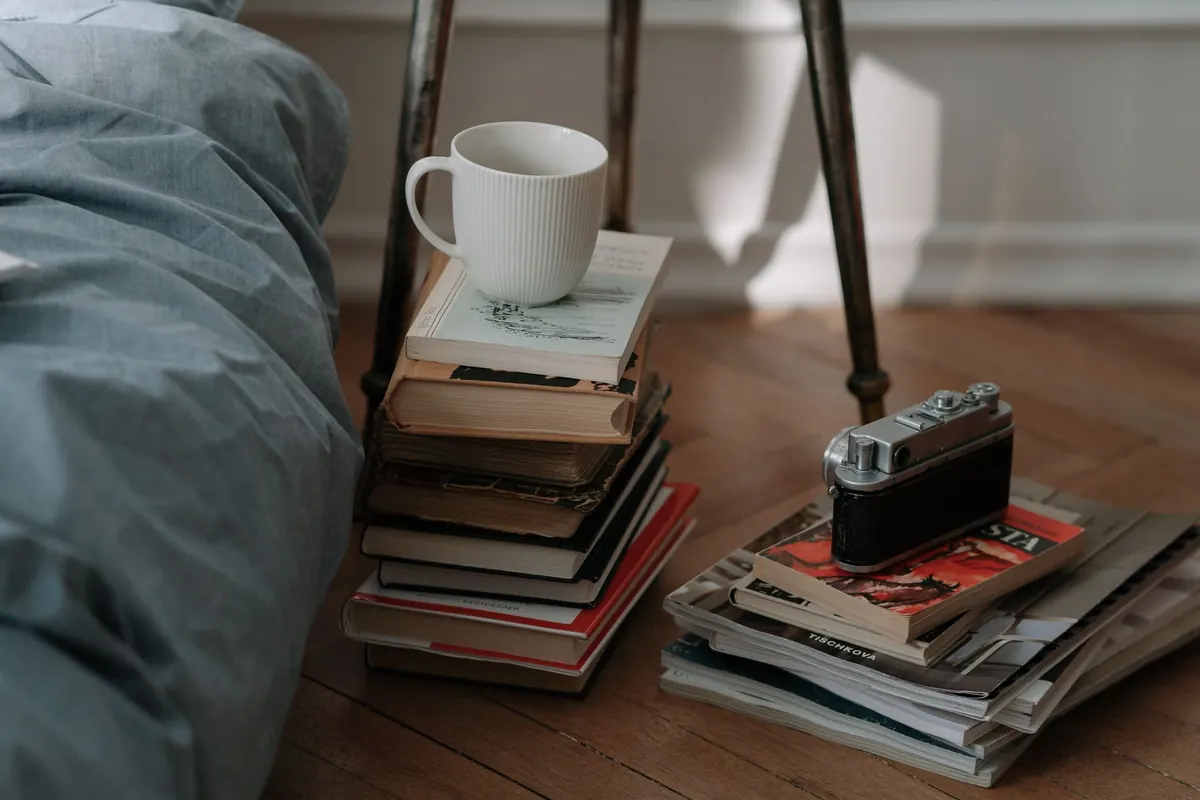
How to Choose Your Next Read When Every Book Feels Like Too Much
There are worse problems to have than a shelf of unread books, but the shelf has a talent for making you feel oddly guilty. You stand in front of it — or scroll past the same twelve titles in your library app — and nothing looks right. Everything is too long, too serious, too clever, or too much like the sort of book you think you should be reading rather than the one you actually want to open.
The trouble is rarely the books. It's that you're trying to answer one question — what next? — without deciding which question you're really asking. Sort that out and choosing takes about five minutes.
Start with three questions, not a book
Before you look at a single title, answer these honestly:
- How much time do I actually have? A ten-minute commute, a lunch break, an hour before sleep, a free weekend.
- What is my reading energy like? Sharp and greedy, steady, or so tired that a paragraph feels like homework.
- What mood am I in? Comfort, escape, curiosity, or something with a bit of bite.
Hold all three answers together. A tired reader with twenty minutes and a need for comfort should not be talked into the 900-page novel everyone keeps pressing on them. That book may be wonderful, but it will sit on the bedside table for three weeks while you reread something familiar instead. Wrong book, wrong moment. Nothing more than that.
Match the book to the time you have
Time is the easiest of the three to get wrong, because we tend to plan for the reader we'd like to be rather than the one we are. If your reading happens in short slices, choose accordingly:
- Five to twenty minutes at a time: short stories, essays, poetry, novellas, or a novel with chapters of four or five pages. Anything you can dip into without needing to remember who everyone is.
- Half an hour to an hour: most contemporary novels work here, as does narrative non-fiction, which tends to come in chapters that stand alone.
- A long evening or a whole day: this is when the big books earn their keep — the doorstoppers, the family sagas, the history you'll want to talk about.
One warning: long books are not harder to read than short ones. They're harder to return to. Two weeks of ten-minute sessions will kill your momentum on a sprawling novel, and then you'll blame yourself instead of the mismatch. If time is tight, go short and finish something. Finishing builds the habit that lets you take on bigger books later.
Work out your reading energy
Energy is different from time. You can have an empty afternoon and no ability to concentrate; you can have a busy day and still want something demanding at midnight. Be honest about which of these you're in.
Low energy
You want a clear plot, a strong voice and short chapters. Genre fiction is excellent here — crime, romance, science fiction, thrillers — as are rereads, which ask nothing of you because you already know the shape of the story. Children's and young adult books work beautifully too. There is no prize for struggling.
Steady energy
This is where most good reading happens: a novel with a proper story and something underneath it, or non-fiction that's well written and lightly argued. You can hold a cast of characters in your head and you're happy to be surprised.
High energy
Dense history, experimental fiction, philosophy, a classic you've been circling for years. Books like this need you awake. Keep one on the go and read it when you're fresh, rather than at the end of the day when you'll only manage half a page.
A useful habit, if you can manage it: two books at once, one for mornings and one for nights. The gap between what you can read at 8am and what you can read at 11pm is usually wider than people admit.
Let your mood narrow the shelf
Once time and energy have ruled things out, mood should rule something in. A few rough matches:
- Comfort: a book with a guaranteed ending, a familiar setting, and stakes that won't keep you awake.
- Escape: plot-driven fiction — a locked-room mystery, a space opera, a historical adventure.
- Curiosity: narrative non-fiction, essays, popular science, biography.
- Feeling something: quieter, character-led novels. Claire Keegan's short books are a good example: brief, precise and emotionally enormous.
- Restlessness: sharp satire, or short stories with teeth.
Then nudge your choice one step outside the mood. If you want comfort, take a comfort read with a slightly unfamiliar setting. If you want escape, pick the thriller set somewhere you've never been. It keeps the decision easy while stopping you from reading the same book in six different covers.
The two-minute test
Once you have two or three candidates, don't agonise over blurbs. Read.
Open the first page and read it. Then turn to a page near the middle and read that too, because first pages are often written to seduce, while middle pages tell you what the book is actually like to live in. If you're still interested, you've found your next read. If you're not, put it down. That's not a judgement on the book; it's information.
Samples make this easy — most library apps let you read the opening pages before committing, and a library card means you can try a book and return it without guilt. Abandoning a book you're not enjoying frees the hours for one you will.
Keep a shortlist, not a mountain
The reason choosing feels impossible is usually that the choice is too big. A to-read list of eighty titles is not a plan; it's a fog.
Replace it with a shortlist of three to five books, chosen for different moods, kept somewhere you'll see it. When you finish one, you're not choosing from everything you've ever meant to read — you're choosing from four. Two of them will already feel right. If two still feel equally right, pick the shorter one; if they're the same length, pick the one you've owned longest. Any tiebreaker beats another twenty minutes of scrolling.
Pick one tonight
Put the method to work:
- Take three candidates off the shelf or out of your library app.
- Ask how much time you have this week and what your energy is likely to be.
- Rule out anything that doesn't fit those two answers, however good it is.
- Read the first page of what's left.
- Commit to the one you keep thinking about, and give it a proper run — an hour of reading, say — before you decide.
You don't need the perfect book. You need the one you'll actually open tonight, which is a smaller and far more useful question. Everything else on the shelf can wait its turn.
Photo: Ron Lach / Pexels
Related Articles